
Fertility tips: why they work and when to use them
Trying to conceive can feel overwhelming, but the right fertility tips can make a real difference. Before considering treatments like IVF or IUI, most couples can significantly improve their odds simply by adjusting their lifestyle, timing, and health habits. These evidence-based fertility tips are drawn from recommendations by ACOG, ASRM, and recent peer-reviewed research.
About 85 percent of healthy couples conceive within 12 months of unprotected intercourse, and roughly 92 percent within 24 months. However, about 15 percent of couples face some form of infertility. According to the ACOG Committee Opinion on prepregnancy counseling, optimizing your health before conception reduces the risk of adverse outcomes for both the future parent and the baby. Therefore, applying practical fertility tips from the start is one of the smartest investments in your future family.
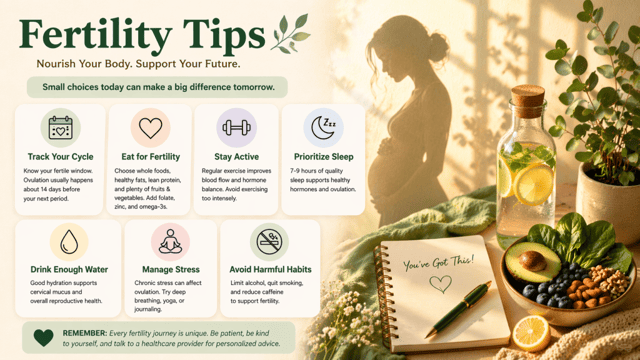
Here are 10 fertility tips that have proven clinical and scientific support.
Ready to start your project?
Join +450,000 members who find their co-parent or sperm donor
Start free✓ Free ✓ No commitment ✓ Verified
1. Start with a visit to your OB-GYN
The most important of all fertility tips is surprisingly simple: book a preconception check-up. Your OB-GYN will screen for conditions that silently undermine fertility, including polycystic ovary syndrome (PCOS), endometriosis, fibroids, thyroid disorders, and fallopian tube blockages.
If you have irregular cycles or any pelvic symptoms, this visit is even more important. Your doctor may prescribe ovulation-inducing medications like Clomid or letrozole when appropriate. Doctors generally recommend evaluation after 12 months of unprotected intercourse without conception, or after 6 months if you are 35 or older.
2. Track your cycle precisely
Among all natural fertility tips, accurate cycle tracking has the strongest evidence base. Most women ovulate 12 to 14 days before their next period, but the exact day varies. Three reliable methods help you pinpoint ovulation:
- Basal body temperature (BBT) charts, which show a 0.5°F rise after ovulation
- Urinary LH predictor kits, which detect the luteinizing hormone surge 24 to 36 hours before ovulation
- Cervical mucus observation: peak fertility coincides with clear, stretchy, egg-white mucus
Fertility apps can help organize data, but they predict ovulation less accurately than LH kits or BBT charts. For best results, combine two methods. See our guide on ovulation tracking for detailed instructions.
3. Have sex at the right time
Timing is one of the most overlooked fertility tips. Sperm can survive up to 5 days in the female reproductive tract, but the egg only lives for 12 to 24 hours after ovulation. The fertile window therefore covers roughly 6 days: the 5 days before ovulation and the day of ovulation itself.
The ASRM committee opinion on optimizing natural fertility recommends intercourse every 1 to 2 days during the fertile window for the highest monthly conception rate. However, forcing a rigid schedule often backfires by creating stress that itself reduces fertility. Aim for natural, frequent intimacy rather than a calendar appointment.
4. Follow a fertility-friendly diet
Nutrition plays a powerful role in reproductive health, which is why eating well ranks high on any list of serious fertility tips. Research supports a Mediterranean-style diet emphasizing:
- Whole grains, legumes, lentils, and beans (complex carbohydrates)
- Leafy greens, colorful vegetables, and fresh fruit
- Oily fish rich in omega-3 (salmon, sardines, mackerel) twice a week
- Healthy fats from olive oil, avocado, nuts, and seeds
- Plant-based proteins and moderate dairy
Avoid trans fats, sugary drinks, and ultra-processed foods. Limit caffeine to 200 mg per day (about one 12 oz coffee) and keep alcohol below 1 drink per day. Also, drink 2 liters of water daily to support cervical mucus production.
5. Prioritize quality sleep
Sleep often gets forgotten among popular fertility tips, but it deeply affects reproductive hormones. Insufficient sleep disrupts the circadian rhythm, raises cortisol, and lowers levels of leptin, LH, and melatonin — hormones involved in ovulation and egg quality.
Adults need 7 to 9 hours of sleep per night. Shift workers and night owls show measurably lower conception rates. To protect your sleep: keep a consistent bedtime, avoid screens 60 minutes before bed, and keep your bedroom cool and dark.
6. Reach and maintain a healthy weight
Weight is one of the most modifiable fertility tips you can act on today. Both extremes hurt reproductive function. Women with a BMI above 30 have up to 3 times higher risk of ovulatory infertility, while women with a BMI below 18.5 often experience irregular or absent periods.
The fertility-optimal BMI range sits between 20 and 25. Research shows that losing just 5 to 10 percent of body weight can restore regular ovulation in women with PCOS. Similarly, gaining a few pounds can restart cycles in underweight women. Combine balanced nutrition with moderate exercise — 150 minutes per week of activities like brisk walking, swimming, or cycling.
7. Manage stress consciously
Stress reduction consistently appears in ASRM and ACOG fertility tips for good reason. Chronic stress elevates cortisol, which interferes with GnRH, LH, and FSH — the key hormones that drive ovulation. High stress also reduces libido and can disrupt menstrual regularity.
Evidence-backed stress-reduction methods include:
- Mindfulness meditation (15 to 20 minutes daily)
- Yoga or gentle stretching 2 to 3 times a week
- Acupuncture, which some studies suggest improves IVF outcomes
- Cognitive-behavioral therapy for fertility-related anxiety
- Regular time in nature and creative hobbies
8. Include men in the fertility conversation
Nearly 50 percent of infertility cases involve a male factor, which is why any honest list of fertility tips must address both partners. Common causes include low sperm count, poor motility, and abnormal morphology.
Men should request a semen analysis if the couple has been trying for 12 months without success. Meanwhile, male partners can boost their own fertility by:
- Quitting smoking and limiting alcohol (sperm count can rise by 50 percent within 3 months of quitting)
- Avoiding hot tubs, saunas, and tight underwear
- Maintaining a healthy weight
- Eating zinc, selenium, and omega-3 rich foods
- Reducing stress and sleeping well
Moreover, sperm production takes about 74 days, so lifestyle changes today will show up in semen quality roughly 3 months later.
9. Consider targeted supplements
Evidence-based supplements complement well-rounded fertility tips:
- Folic acid (400 to 800 mcg/day) — essential to prevent neural tube defects, should start 3 months before conception
- Vitamin D — linked to improved ovulation and embryo quality, especially in deficient women
- CoQ10 (200 to 600 mg/day) — may improve egg and sperm quality, particularly after age 35
- Myo-inositol — shown to regulate cycles and restore ovulation in women with PCOS
- Omega-3 fatty acids — support hormone balance and embryo development
Always consult your doctor before starting supplements. Some interact with medications or are inappropriate for specific conditions.
10. Be patient — and know when to seek help
The final and often hardest of all fertility tips: give yourself time. For couples under 35, monthly conception probability is only 20 to 25 percent, even when everything goes right. About 80 percent of couples conceive within a year.
However, don’t wait forever. ACOG guidelines clearly recommend:
- Under 35: see a fertility specialist after 12 months of trying
- Age 35 to 40: seek evaluation after 6 months
- Over 40: consult a specialist immediately
- Any age with known risk factors (PCOS, endometriosis, prior pelvic surgery, irregular cycles): consult without delay
Even with the best fertility tips, some couples still need medical help. Exploring options like IUI, IVF, or donor conception is a valid path. Platforms like CoParents.com can also connect future parents with donors or co-parents when needed, opening alternative paths to building a family.
Frequently asked questions about fertility tips
How long does it take to improve fertility with lifestyle changes?
Most fertility tips related to diet, sleep, and exercise show measurable effects within 3 months. This matches the length of one full cycle of egg maturation and sperm production (about 74 days for sperm, 90 days for egg preparation). Consistency is key.
Which fertility tips matter most for women over 35?
For women over 35, the priority shifts toward early evaluation, optimizing egg quality (CoQ10, antioxidants, vitamin D), and not delaying medical consultation. Age is the strongest single predictor of female fertility; lifestyle fertility tips help but cannot fully reverse ovarian aging.
Can stress really prevent pregnancy?
Chronic, severe stress can delay ovulation, disrupt cycles, and lower libido. While normal daily stress rarely causes infertility on its own, prolonged high cortisol levels measurably reduce conception rates. This is why nearly every set of fertility tips emphasizes stress management.
Do fertility tips work the same for everyone?
No. Individual response varies based on age, underlying conditions, weight, and genetics. Women with PCOS benefit most from weight management and myo-inositol. Women over 38 benefit most from early medical evaluation. Couples with male-factor issues benefit most from lifestyle changes for the male partner.
When should I stop relying on fertility tips and see a specialist?
If you have followed evidence-based fertility tips for 6 to 12 months without success (based on your age), it is time to see a reproductive endocrinologist. Early evaluation saves time, identifies treatable conditions, and improves outcomes.
Applying these fertility tips is a powerful first step, but you don’t have to walk the path alone. If conception remains difficult or you are considering donor conception or co-parenting, join a supportive community of future parents and donors. Create your free CoParents account today and take the next step toward building your family.