
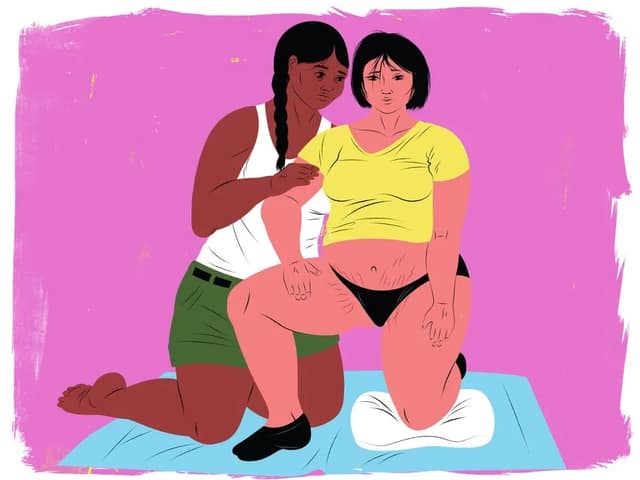
Why Hire a Birth Doula for Your Labor and Delivery
If you are pregnant, you probably already have a great doctor. So why would you also need a birth doula? Labor and delivery are rarely a piece of cake, and extra one-to-one support can transform the experience. A birth doula stays by your side during one of the most important moments of your life, especially if you are becoming a parent for the first time.
What Is a Birth Doula Exactly?
A birth doula is a trained, non-medical professional who provides continuous emotional, physical, and informational support before, during, and shortly after childbirth. Her role is clearly different from that of a midwife or obstetrician. She does not perform clinical tasks, prescribe, or make medical decisions.
According to DONA International, the world’s leading doula certifying organization, birth doulas help families understand their options and receive evidence-based support without judgment. The word itself comes from ancient Greek and originally meant “a woman who serves.”
Ready to start your project?
Join +450,000 members who find their co-parent or sperm donor
Start free✓ Free ✓ No commitment ✓ Verified
A doula typically meets you twice during pregnancy, stays with you throughout active labor and delivery, and visits once or twice after birth. She is hired privately and does not replace your medical team.
Birth Doula vs. Midwife vs. Obstetrician
These three roles are often confused. The table below summarizes their key differences in the United States.
| Role | Clinical care | Main focus |
|---|---|---|
| Birth doula | No | Continuous emotional, physical, informational support |
| Certified Nurse-Midwife (CNM) | Yes | Prenatal care, delivery, postpartum, low-risk pregnancies |
| Obstetrician (OB-GYN) | Yes | Medical management, surgical care, high-risk pregnancies |
Why Should You Hire a Birth Doula?
A birth doula brings reassurance to first-time parents who often feel overwhelmed by the unknown. Therefore, many couples describe her presence as the single most calming factor of their delivery.
She answers your questions about pregnancy, helps you prepare for labor and delivery, and discusses your fears openly. Moreover, she guides you through writing a clear birth plan that reflects your real preferences on epidurals, fetal monitoring, positions, or C-section.
During labor, she stays in the room the entire time. She suggests comfort measures, counter-pressure techniques, massage, breathing patterns, or position changes that can ease contractions. She also explains what the medical staff is doing when things move fast.
After birth, many families extend the relationship by hiring a postpartum doula who supports newborn care, feeding, and parental recovery during the first weeks at home.
Is a Birth Doula Backed by Science?
Yes, and the evidence is strong. The 2017 Cochrane systematic review on continuous support during childbirth pooled data from 26 trials involving more than 15,000 women across 17 countries. The findings are consistent and robust.
Continuous one-to-one support, especially when provided by someone in a doula role, was associated with:
- Higher rates of spontaneous vaginal birth
- Shorter labor duration
- Lower likelihood of cesarean birth
- Less need for pain medication, including epidural
- Fewer instrumental deliveries (forceps, vacuum)
- Better 5-minute Apgar scores
- Fewer negative feelings about the birth experience
No adverse outcomes were identified. Support provided by a doula produced the largest effect sizes, greater than support from hospital staff or a partner alone.
The American College of Obstetricians and Gynecologists agrees. ACOG Committee Opinion No. 766 on approaches to limit intervention during labor and birth states that continuous one-to-one emotional support from a doula is associated with improved outcomes and should be considered one of the most effective tools to improve labor and delivery.
How Can a Birth Doula Reduce Pain and Anxiety?
A birth doula helps reduce pain perception through a combination of techniques rather than medication. She uses non-pharmacological tools such as massage, counter-pressure on the lower back, hip squeezes, warm compresses, breathing guidance, vocalization, and repositioning on a birth ball.
However, her role goes beyond physical comfort. She holds space emotionally, which lowers stress hormones like cortisol and catecholamines. Consequently, the body releases oxytocin and endorphins more freely, which supports labor progression naturally.
When a partner feels lost or exhausted, the doula relieves pressure without replacing him or her. She knows when to step forward and when to step back, so the couple remains the central unit of the birth.
How Much Does a Birth Doula Cost in the US in 2026?
Birth doula fees in the United States typically range from $500 to $4,000 per birth, depending on location, experience, and package scope. Most doulas charge a flat fee that includes prenatal meetings, on-call availability around your due date, continuous labor support, and one postpartum visit.
| Doula profile | Typical flat-fee range (US) |
|---|---|
| New doula working toward certification | $500 – $1,200 |
| Experienced doula (several years) | $1,200 – $2,200 |
| Veteran or high-demand doula | $1,800 – $4,000+ |
| Postpartum doula (hourly) | $25 – $80 / hour |
Rates run higher in large metropolitan areas like New York City, Los Angeles, San Francisco, or Washington, D.C., where a birth package can reach $3,500 or more. In smaller towns and rural areas, prices can drop closer to $800.
Does Insurance Cover a Birth Doula?
Most private insurance plans still do not cover doula services directly. However, the picture is changing fast. As of 2025, more than 20 states plus Washington, D.C., offer Medicaid reimbursement for doula care, and TRICARE covers doula support for active-duty military families. Additionally, Rhode Island and a few other states now require certain state-regulated private insurers to cover doula services.
If your plan does not cover a doula, you may still have options:
- Health Savings Account (HSA) or Flexible Spending Account (FSA), especially with a letter of medical necessity from your provider
- Sliding-scale fees offered by some doulas
- Doulas in training, who often offer reduced or free services to complete certification
- Community-based or nonprofit doula programs
- Payment plans directly with the doula
How to Choose the Right Birth Doula
Finding the right birth doula matters more than finding the cheapest one. Therefore, interview at least two or three candidates before committing. Ask about certification (DONA International, CAPPA, ProDoula, DTI), number of births attended, backup arrangements, and her philosophy on medicated versus unmedicated births.
A good doula respects your choices. She does not push an agenda on unmedicated birth, home birth, or any particular approach. Her job is to inform and support, not to decide.
Book early. Most experienced doulas fill their calendar 4 to 6 months ahead, so ideally hire her around your second trimester.
If you are growing your family through donor conception or co-parenting, the CoParents community connects future parents across the United States — you can find support and stories from other members on coparents.com.
Frequently Asked Questions About Birth Doulas
Does a birth doula replace my partner during labor?
No. A birth doula works alongside your partner, not instead of them. She takes care of the practical and physical support so your partner can stay emotionally present with you. Many partners actually feel more confident knowing a trained professional is in the room.
Can I have a birth doula if I want an epidural or a scheduled C-section?
Yes. A birth doula supports every type of birth, including medicated vaginal deliveries, planned cesareans, and VBACs. Her role is to support your choices, whatever they are.
When should I hire a birth doula during pregnancy?
The second trimester, between 20 and 28 weeks, is the sweet spot. Good doulas book fast, and hiring early gives you time for two or three prenatal meetings before labor starts.
What is the difference between a birth doula and a postpartum doula?
A birth doula supports you during late pregnancy, labor, and delivery. A postpartum doula focuses on the weeks after birth — newborn care, feeding support, recovery, and parental sleep. Some doulas are trained in both.
Will a birth doula come to a home birth or a hospital birth?
Both. Birth doulas work in hospitals, birth centers, and home births. Confirm her experience with your chosen setting during the interview.
Building Your Family with CoParents
Whether you are a solo mom-to-be, a couple exploring sperm donation, or co-parents planning a pregnancy together, surrounding yourself with the right support matters from day one. Join a community of future parents and create your free CoParents account to connect with donors, co-parents, and people sharing your journey.