
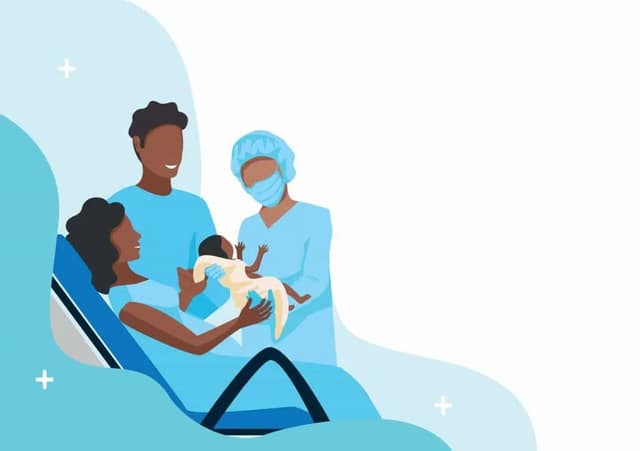
Giving birth typically happens between 37 and 42 weeks of pregnancy and unfolds in three stages: contractions and cervical dilation, pushing and delivery of the baby, and delivery of the placenta. According to MedlinePlus from the National Library of Medicine, first-time labors usually last 12 to 18 hours, while subsequent labors average 8 to 10 hours. Knowing what to expect makes a real difference.
The last few weeks of pregnancy always seem to be the longest. However, the big day often arrives sooner than expected. Before you hold your baby in your arms for the first time, take advantage of the third trimester to prepare. Learning to recognize signs of labor, choosing your birth options and packing your hospital bag are essential steps to take before giving birth.
Should I take a childbirth class before giving birth?
Yes, attending a childbirth class is one of the most reliable ways to prepare. Information about giving birth is everywhere — television, internet, books, magazines — but quality varies wildly. Childbirth classes give you direct access to qualified professionals who can answer your questions with evidence-based answers.
Ready to start your project?
Join +450,000 members who find their co-parent or sperm donor
Start free✓ Free ✓ No commitment ✓ Verified
The medical team will share precious tips about pregnancy, labor, delivery and the postpartum period. You will also meet other moms-to-be and exchange experiences. Most US hospitals and birthing centers offer in-person or virtual childbirth education, often free or low-cost.
Stages of labor: what happens when giving birth
Knowing the three stages of labor helps reduce anxiety. Stress tightens muscles and intensifies pain, so the more you understand the process, the smoother giving birth tends to feel.
| Stage | What happens | Typical duration |
|---|---|---|
| Stage 1 — Early & active labor | Cervix dilates from 0 to 10 cm | 6 to 18 hours (first baby) |
| Stage 2 — Pushing & delivery | Baby moves through the birth canal | 30 minutes to 3 hours |
| Stage 3 — Placenta | Placenta is expelled | 5 to 30 minutes |
How do I recognize signs of labor?
Common signs include regular contractions getting closer together, leaking fluid or bleeding from the vagina, low dull backache, and abdominal cramps. True labor contractions follow a pattern, last 60 to 90 seconds and keep getting stronger — they don’t stop when you change position. False contractions, called Braxton-Hicks, stop with movement.
Call your provider immediately if your water breaks without contractions, you bleed heavily, you feel constant severe pain or your baby moves less than usual.
Natural childbirth, epidural or C-section: how to choose
Beyond your hospital and provider, share your wishes for pain management with your medical team well before giving birth. The three main paths in the US are unmedicated vaginal birth, epidural-assisted vaginal birth and cesarean delivery.
According to the CDC National Center for Health Statistics 2024 provisional data, the US cesarean delivery rate reached 32.4% of all births, while the low-risk cesarean rate held steady at 26.6%. Roughly 3 in 4 women receive an epidural or spinal anesthesia for vaginal labor.
Things don’t always go as planned. Be prepared to be flexible. Doctors may recommend a C-section even if your preference was vaginal — what matters is the safety of you and your baby. A clear birth plan helps your team honor your priorities while keeping options open.
What exercises help me prepare for giving birth?
Some exercises strengthen the muscles you’ll rely on during labor. Always ask your provider before starting a new routine.
- Kegel exercises tone the pelvic floor muscles supporting the uterus, bladder and bowels. They help prevent hemorrhoids and urinary leakage that often appear when women get pregnant with donor sperm or naturally. Contract for a few seconds, relax, and repeat.
- Squats open the pelvic outlet during labor and encourage the baby to descend. Practice them throughout pregnancy because they tire quickly with a third-trimester belly.
- Pelvic tilts release the back pain that often comes with pregnancy and labor, and they facilitate delivery.
What to pack in my hospital bag
Pack your hospital bag by week 36. You won’t have the energy in active labor, and being ready reduces stress. Useful items include:
- Hygiene products: toothpaste, toothbrush, brush, hair clips, lotion, lip balm, soap, shampoo, deodorant, sanitary pads.
- Comfortable clothes: loose tops, bathrobe, nightgown, warm socks, maternity underwear and nursing bras.
- Comfort items: slippers, snacks, books, magazines, a pen and notebook, music and headphones.
- Eyeglasses or contact lenses.
- Camera, phone, charger and spare batteries.
- Paperwork: birth plan, insurance card, photo ID, hospital pre-registration forms.
Don’t forget your baby’s bag — going-home outfit, swaddle, hat, car seat — and your partner’s bag too.
Who will be in the delivery room when I’m giving birth?
This is a deeply personal decision. Some women prefer only the medical team. Others want their partner, co-parent, best friend, parents or grandparents present. Single mothers who choose to have a baby alone often invite a trusted friend or hire a doula.
You can change your mind at any moment. If you wanted to be alone but suddenly need your partner, say so. Hospitals usually allow at least one support person, and many allow two during vaginal birth.
Can yoga, meditation and a doula help with giving birth?
Prenatal yoga teaches breath control, releases back tension and reduces labor pain. Meditation helps manage discomfort and anxiety. Both are recommended by major obstetric organizations as low-risk complements to medical care.
A trained doula offers another layer of support. Hiring a birth doula has been associated with shorter labors, fewer cesareans and reduced need for pain medication. Doula fees in the US generally range from $800 to $2,500 and are rarely covered by insurance, though some Medicaid programs now reimburse doula services in 2026.
What techniques manage pain when giving birth?
Beyond epidural anesthesia and IV medication, several techniques help you cope with contractions:
- Breathing exercises calm the nervous system and pace each contraction.
- Movement and position changes: walking, rocking, sitting on a birth ball.
- Hydrotherapy: a warm shower or tub eases muscle tension.
- Massage on the back or feet, especially during contractions.
- Visualization, music and meditation: powerful tools to keep you grounded.
Fear of pain makes you tense up, which makes giving birth hurt more. Anything that calms you genuinely reduces pain perception.
Take time for yourself in the third trimester
The third trimester is your last chance to slow down before the big day. After birth, quiet moments become rare. Watch your favorite series with a hot drink, take long naps, and get as rested as possible. Pregnancy support from family and friends matters now more than ever.
Frequently asked questions
How long does giving birth take for a first baby?
For a first baby, labor typically lasts 12 to 18 hours from the start of regular contractions to delivery. For women who have given birth before, labor averages 8 to 10 hours. Every labor is different and yours may not match your mother’s, sister’s or friend’s.
When should I go to the hospital when giving birth?
Apply the 5-1-1 rule: contractions every 5 minutes, lasting 1 minute, for 1 hour. Go immediately if your water breaks, you bleed heavily, you have constant severe pain, or your baby moves less than usual.
What is the safest way of giving birth in 2026?
For low-risk pregnancies, vaginal delivery in a hospital or accredited birth center remains the standard of care recommended by US obstetric guidelines. Cesarean delivery is safer when medical conditions like fetal distress, placenta previa or arrested labor make vaginal birth risky. Discuss your individual risk profile with your obstetric provider.
Can I have a birth plan and still be flexible?
Yes — a written birth plan lists your preferences for pain management, who is in the room, immediate skin-to-skin contact, delayed cord clamping and feeding choices. Share it with your team during a third-trimester appointment. Stay open to change: roughly 1 in 3 US births involve unplanned interventions.
Can I hire a doula if I’m having a baby alone?
Yes. Single mothers, lesbian couples and co-parenting families increasingly hire doulas for continuous emotional and physical support during giving birth. A doula is not a medical professional but works alongside your obstetric team.
Whether you are giving birth as part of a couple, as a single mother by choice or in a co-parenting arrangement, the path to parenthood looks different for everyone. Join CoParents.com today to connect with thousands of singles and couples worldwide who are ready to start their family — through co-parenting, sperm donation or shared parenthood.