
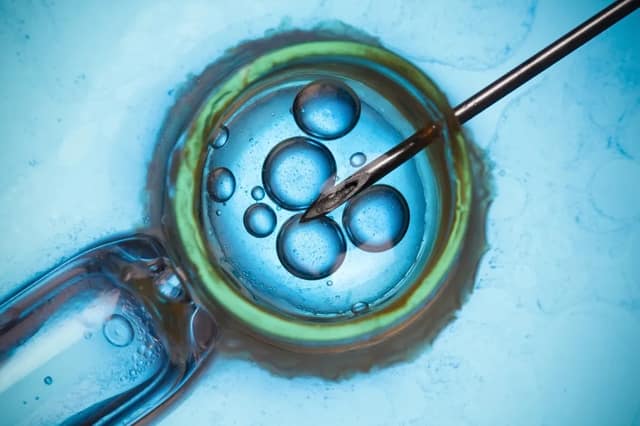
The IVF success rate in the United States ranges from about 50% per intended egg retrieval for women under 35 to under 5% for women over 42, according to the latest CDC and SART national data. But a single percentage rarely tells the full story. The way each clinic calculates and presents its IVF success rate can mislead patients into choosing the wrong fertility center for their situation.
Every year for the past three decades, the Centers for Disease Control and Prevention (CDC) has gathered vital statistics from US fertility clinics under the Fertility Clinic Success Rate and Certification Act of 1992. Some of this data, like the National ART Surveillance System, is genuinely useful for prospective parents. Other figures are not. In fact, some published numbers can be downright harmful when read out of context.
What the IVF success rate really measures
An IVF success rate is most often expressed as the number of live births divided by the number of treatment cycles, multiplied by 100. The figure looks simple. It isn’t. The CDC publishes its data per intended retrieval, per actual retrieval and per embryo transfer — three very different denominators that can swing a clinic’s headline number by 20 points or more.
Ready to start your project?
Join +450,000 members who find their co-parent or sperm donor
Start free✓ Free ✓ No commitment ✓ Verified
In 2022, the latest year of finalized CDC data, 457 US fertility clinics performed 435,426 ART cycles on 251,542 unique patients. These cycles produced 94,039 live-birth deliveries and 98,289 babies — about 2.6% of all infants born in the US that year. Of those cycles, 184,423 were egg or embryo banking cycles where everything was frozen for future use.
IVF success rate by age in 2026: the numbers that matter
Age remains the single most powerful predictor of an IVF success rate. According to 2022 SART national data, live birth rates per intended egg retrieval using the patient’s own eggs were:
| Age of patient | Live birth per intended retrieval | Cumulative live birth per new patient |
|---|---|---|
| Under 35 | 43.1% | about 69% |
| 35 to 37 | 31.0% | about 59% |
| 38 to 40 | 19.0% | about 43% |
| 41 to 42 | around 10% | about 24% |
| 43 and over | under 5% | about 8% |
For women over 42, a peer-reviewed analysis of SART CORS data published in 2023 showed cumulative live birth rates plateau quickly: 9.7% at age 43, 8.6% at 44, 5.0% at 45, 3.6% at 46, and just 1.3% at age 50 or older. Beyond age 47, additional cycles barely move the needle.
Why the IVF success rate by clinic can mislead you
The trouble starts when patients use clinic-level numbers to compare centers head-to-head. The CDC explicitly warns against this, and SART repeats the warning on every clinic report.
The reason is simple: comparing clinics is like comparing apples to oranges. Different fertility centers treat different types of infertility, accept different types of patients and offer different procedures. A center that only works with women under 38 with no diagnosis of diminished ovarian reserve will always look better on paper than a center that takes complex cases over 42, and yet the second center may be far more skilled.
How clinics inflate their IVF success rate
A few selection tactics can lift any clinic’s headline number:
- Patient screening by age: turning away women over 40 raises the average dramatically because women under 35 have around 27% live births per transfer versus 1.1% for women over 44.
- Excluding embryo banking cycles: a 2016 NIH study found that excluding banking cycles from reports inflated published live birth rates by up to 56% in women over 44.
- Single embryo transfer policies: reporting only singleton deliveries treats healthy twins as a non-success, even though many couples consider twins a positive outcome.
- Heavy pre-treatment protocols: some clinics prescribe broad-spectrum antibiotics or extra ovarian stimulation to reduce the chance of a first failed cycle dragging the rate down.
How to read an IVF success rate the right way
The Society for Assisted Reproductive Technology (SART) regulates how its member clinics — about 81% of all US IVF centers reporting 90% of national cycles — can advertise their numbers. SART forbids member clinics from comparing their rates to those of competitors or publishing comparative tables.
But there are loopholes. Clinics can write “ask us about our success rates” or “check out our SART data” in their marketing, then provide selectively framed figures during a consultation. To protect yourself, use these five questions when reviewing any clinic’s numbers:
- Is this rate per intended retrieval, per actual retrieval, or per transfer?
- Does it use my age band specifically, or is it a clinic-wide average?
- Are donor egg cycles, frozen embryo transfers and PGT-tested embryos included or separated?
- What is the clinic’s cancellation rate before retrieval?
- What is the cumulative live birth rate after three cycles, not just one?
Donor eggs and the IVF success rate
For women over 40, the live birth rate using their own eggs declines sharply. Donor egg IVF, where eggs come from a young donor (typically 21 to 33), produces success rates that depend much more on the donor’s age than the recipient’s. Female egg donors who pass medical and genetic screening typically support live birth rates above 50% per transfer regardless of recipient age, which is why egg freezing in your 20s or early 30s can be a powerful insurance policy.
What an IVF success rate cannot tell you
Numbers can never capture the human side of fertility care: how a clinic communicates, whether it specializes in lesbian couple baby options like reciprocal IVF, whether it welcomes single women who want to have a baby, and how transparent it is about cancellations and unsuccessful cycles. A clinic with a slightly lower IVF success rate that takes complex cases and explains every option may serve you far better than a polished competitor that turns difficult patients away.
Male fertility is also part of the equation: roughly 30% of US fertility cases involve a male factor, and IVF with ICSI (intracytoplasmic sperm injection) is now used in over 70% of US cycles to address it.
Frequently asked questions
What is a good IVF success rate in 2026?
For a woman under 35 using her own eggs, a clinic should report a live birth rate of at least 40 to 45% per intended retrieval. For ages 38 to 40, expect 19 to 25%. Anything substantially higher than national averages should prompt questions about patient selection, not assumptions of superior skill.
How does the IVF success rate change with each cycle?
Cumulative live birth rates rise across multiple attempts but plateau eventually. For women under 42, the curve flattens after the 4th or 5th retrieval. For women aged 43 to 44, the plateau hits at cycle 5; at age 45 and 46 it occurs by cycle 2 or 3; from age 47 onward additional cycles add less than 1% each.
Are CDC and SART numbers the same?
No. CDC data come from all 457 reporting clinics under federal mandate. SART data cover the roughly 81% of clinics that voluntarily belong to SART, which represents about 90% of all US IVF cycles. SART tends to publish data first and includes more granular outcomes per new patient.
Does the IVF success rate include frozen embryo transfers?
It depends on the metric. Per-retrieval rates include all transfers — fresh and frozen — that come from a single egg retrieval, which is the most patient-relevant figure. Per-transfer rates separate fresh and frozen and tend to be higher for frozen transfers in modern protocols.
Can I check my own IVF success rate before treatment?
Yes. The CDC offers a free IVF Success Estimator that uses your age, BMI, infertility diagnosis and other factors to estimate your personal probability of a live birth. It is an estimate, not a guarantee, but it gives a useful baseline before consultations.
Whether you are exploring IVF, donor sperm, donor eggs or co-parenting, the most affordable starting point is often a known donor or co-parent. Join CoParents.com today and connect with thousands of members worldwide who are ready to help you build your family — through co-parenting, sperm donation or shared parenthood.