
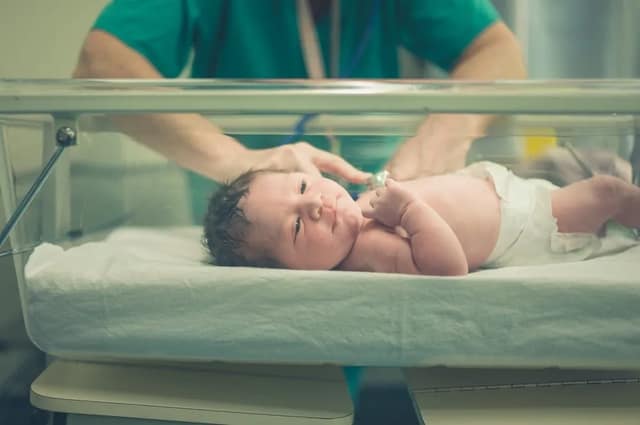
A three parent baby is a child conceived through mitochondrial donation, an IVF technique that uses DNA from three people — the mother, the father, and a female donor whose healthy mitochondria replace the mother’s defective ones. The goal is to prevent the transmission of fatal mitochondrial diseases that pass exclusively from mother to child.
For nearly a decade, the technique was discussed in theory more than in practice. That changed in July 2025, when Newcastle University and Monash University announced in the New England Journal of Medicine that eight healthy babies — four boys and four girls — had been born in the UK using mitochondrial donation, with no signs of the disease their mothers carry.
What is a three parent baby?
The term “three parent baby” is medically inaccurate but widely used in the press. The donor contributes only the mitochondria — tiny energy-producing structures inside cells that carry their own DNA, separate from the nucleus. Mitochondrial DNA represents about 0.1% of a person’s total DNA and codes only for cellular energy production. It does not influence eye color, height, personality, intelligence or any inherited trait.
Ready to start your project?
Join +450,000 members who find their co-parent or sperm donor
Start free✓ Free ✓ No commitment ✓ Verified
So a three parent baby genetically inherits:
- 99.9% of nuclear DNA from the biological mother and father (everything that makes the child resemble the parents).
- ~0.1% of mitochondrial DNA from the female donor (only the cellular battery).
Most scientists prefer the term “mitochondrial donation” or “mitochondrial replacement therapy” (MRT) over “three parent baby” because the latter overstates the donor’s genetic contribution.
Why mitochondrial donation matters: Leigh syndrome and other diseases
Mitochondrial diseases affect approximately 1 in 5,000 births. They are devastating, incurable, and pass only from mother to child because sperm cells do not contribute mitochondria to the embryo.
The most well-known is Leigh syndrome, a severe neurological disorder that usually appears in the first year of life. According to MedlinePlus Genetics, Leigh syndrome causes progressive loss of mental and movement abilities, and most affected children die before age 3 from respiratory failure. There is no cure.
Other mitochondrial conditions include MELAS syndrome (stroke-like episodes), Leber’s hereditary optic neuropathy (sudden blindness), and Kearns-Sayre syndrome (heart and muscle failure). Symptoms often hit organs that consume the most energy: brain, heart, muscles, eyes.
For a couple where the mother carries a high load of defective mitochondria, the only previous options were donor eggs (no genetic link to the mother), adoption, prenatal testing followed by termination, or accepting the risk. A three parent baby procedure offers a fourth path: a healthy child genetically related to both parents.
How a three parent baby is conceived: pronuclear transfer vs. spindle nuclear transfer
Two laboratory techniques can produce a three parent baby. Both rely on standard IVF followed by a microsurgical step.
| Technique | When transfer happens | Used by |
|---|---|---|
| Spindle nuclear transfer (MST) | Before fertilization, at the egg stage | Dr. John Zhang, New York / Mexico (2016) |
| Pronuclear transfer (PNT) | After fertilization, at the early embryo stage | Newcastle Fertility Centre, UK (2017–2025) |
In both cases, the principle is identical: the mother’s nuclear DNA is moved into a donor egg whose nucleus has been removed but whose healthy mitochondria remain. The reconstructed egg or embryo is then transferred into the mother’s womb, exactly as in a standard IVF cycle.
The 2016 Jordanian case: the first three parent baby
The world’s first publicly confirmed three parent baby was born on April 6, 2016, to a Jordanian couple. After 20 years of trying to conceive, four miscarriages, and the deaths of two daughters from Leigh syndrome — one at age 6, the other at 8 months — the couple traveled to Mexico, where Dr. John Zhang of New Hope Fertility Center in New York performed spindle nuclear transfer.
Of five reconstructed embryos, only one developed normally. The mother gave birth nine months later to a healthy baby boy. Less than 1% of his mitochondria carried the disease-causing mutation — well below the ~18% threshold considered clinically dangerous.
The 2025 Newcastle breakthrough: 8 healthy babies
The Newcastle Fertility Centre at Life is the only clinic in the world legally licensed to perform mitochondrial donation. It launched its trial in 2017 under the supervision of the UK Human Fertilisation and Embryology Authority (HFEA).
Key results published in the NEJM on July 16, 2025:
- 22 women underwent pronuclear transfer at Newcastle.
- 8 babies were born — 4 boys, 4 girls, ages from under 6 months to over 2 years.
- For 6 babies, the level of mutated mitochondrial DNA was reduced by 95–100%.
- For the other 2 babies, the reduction was 77–88% — still below the disease-causing threshold.
- All babies were healthy at birth and meeting their developmental milestones.
- 3 babies experienced minor early health issues, none directly attributable to mitochondrial donation.
As of July 1, 2025, the HFEA had granted approval to 35 patients. A 9th pregnancy was ongoing at the time of publication. Long-term follow-up will continue for years.
Where is the three parent baby procedure legal in 2026?
Mitochondrial donation remains tightly regulated worldwide. Legal status as of 2026:
- United Kingdom: legal since 2015, performed only at Newcastle Fertility Centre, case-by-case HFEA approval.
- United States: banned. A congressional rider since 2015 prevents the FDA from reviewing any clinical trial involving heritable embryo modification.
- France, Germany, Italy: not approved.
- Mexico, Ukraine, Greece: performed in private clinics with limited oversight; some reports document mitochondrial carryover at higher than expected rates.
- Australia: legalized in 2022 (“Maeve’s Law”), with a Mitochondrial Donation Pilot Program now active.
For US couples carrying a serious mitochondrial mutation, the practical options remain genetic testing of embryos (PGT-M) during conventional IVF, donor egg IVF, or international travel for mitochondrial donation in the UK or Australia (subject to residency and approval rules).
Frequently asked questions about the three parent baby technique
Does a three parent baby have three biological parents?
Genetically, no. The donor contributes only the mitochondrial DNA, which represents about 0.1% of total DNA and codes only for energy production — not for any inherited trait. Legally and emotionally, a three parent baby has two parents: the mother and the father. The mitochondrial donor is a tissue donor, similar to a blood or organ donor, with no parental rights or legal relationship to the child.
Is the three parent baby technique safe?
The Newcastle 2025 NEJM publication shows reassuring early results: 8 healthy babies, no major safety signals at 6 months to 2 years. However, an Oxford team detected mitochondrial carryover in 2 out of 7 babies conceived via mitochondrial donation in Greece, suggesting long-term monitoring is essential. The HFEA continues to oversee every UK case individually.
Can same-sex couples or single women have a three parent baby?
The technique was designed specifically to prevent transmission of mitochondrial disease, not for family-building. It is only authorized for women with a confirmed high-risk mitochondrial DNA mutation. Lesbian couples and single women who want a biological child use other established paths: donor sperm, known co-parents, or reciprocal IVF.
Will children created this way pass the disease to their own children?
This is precisely why the Newcastle and US clinical communities have historically preferred male embryos: men do not transmit mitochondrial DNA to their offspring. The 2025 Newcastle data include 4 girls, raising new questions about long-term inheritance. Researchers will follow these children and any future grandchildren for decades.
How much does a three parent baby procedure cost?
The Newcastle program, funded by Wellcome and NHS England, is free for approved UK patients. Outside the UK, costs are not standardized but typically range from $50,000 to $150,000 for IVF, mitochondrial donation, donor egg compensation, embryo testing, transfer, and legal fees combined.
Building a family is rarely a straight line — for some, it leads to mitochondrial donation; for others, to sperm donation, co-parenting, or shared parenthood. Whatever path you envision, you don’t have to walk it alone. Join CoParents.com today and connect with more than 150,000 members worldwide who are building modern families their own way.