
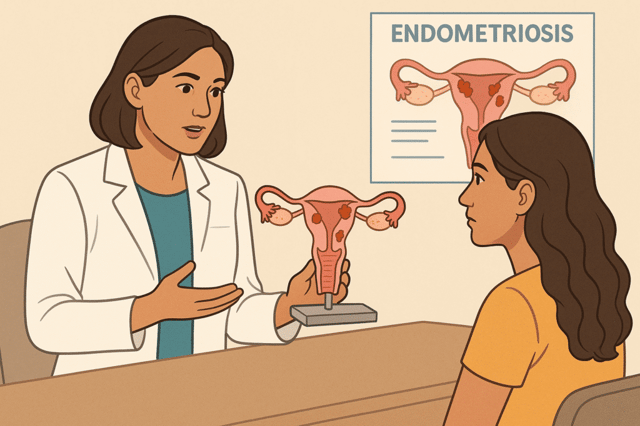
Endometriosis fertility challenges affect 30% to 50% of women with the condition, yet most still conceive — naturally or with treatment. Outcomes depend on disease stage, age, and how quickly you act.
Around 60% to 70% of women with endometriosis get pregnant on their own, even with severe symptoms. The rest may need fertility treatment, but pregnancy remains a realistic goal for the vast majority.
This guide covers endometriosis fertility from every angle: what the disease does to your reproductive system, which treatments actually work, and when to see a specialist. You will also find natural conception rates, surgery success data, and IVF outcomes so you can make informed decisions.
Ready to start your project?
Join +450,000 members who find their co-parent or sperm donor
Start free✓ Free ✓ No commitment ✓ Verified
What Is Endometriosis and How Does It Affect Fertility?
Endometriosis is a chronic condition where tissue similar to the uterine lining grows outside the uterus — on ovaries, fallopian tubes, the bladder, or intestines. According to the World Health Organization endometriosis fact sheet, the disease affects roughly 190 million women worldwide, or about 10% of reproductive-age women.
This misplaced tissue bleeds with each menstrual cycle but cannot exit the body. The result: chronic inflammation, scar tissue (adhesions), and ovarian cysts called endometriomas.
Endometriosis Stages and Their Impact
Doctors classify endometriosis into four stages based on lesion location, depth, and adhesion severity:
- Stage 1 (minimal) — few superficial lesions, no significant adhesions
- Stage 2 (mild) — more lesions, slight adhesions
- Stage 3 (moderate) — many deep lesions, small endometriomas, some adhesions
- Stage 4 (severe) — many deep lesions, large endometriomas, dense adhesions
The stage does not always match symptom intensity. Some women with stage 1 have severe pain, while others with stage 4 have none. However, advanced stages typically reduce natural conception chances more than early stages.
Why Endometriosis Reduces Fertility
The National Institute of Child Health and Human Development lists several mechanisms by which endometriosis fertility is impaired. First, scar tissue can block fallopian tubes or distort pelvic anatomy, preventing eggs from meeting sperm. Second, chronic pelvic inflammation damages eggs, sperm, and embryos. Third, endometriomas reduce ovarian reserve and egg quality. Finally, the uterine lining may not develop properly, making embryo implantation harder.
Natural Conception Rates with Endometriosis
Pregnancy chances with endometriosis vary widely by stage. The American Society for Reproductive Medicine reports that 20% to 50% of infertile women have endometriosis, but the reverse is also true: most women with endometriosis still conceive.
| Endometriosis Stage | Monthly Pregnancy Rate | Recommended Action |
|---|---|---|
| Stage 1-2 (minimal/mild) | 2% to 4.5% | Try naturally 6-12 months |
| Stage 3 (moderate) | 1% to 2% | Consider surgery or IVF |
| Stage 4 (severe) | Less than 1% | IVF often recommended |
Healthy women without endometriosis have a 15% to 20% monthly chance of pregnancy, so the comparison shows clear differences in endometriosis fertility outcomes. Still, cumulative pregnancy rates over two years remain meaningful: 45% after laparoscopy and 63% after laparotomy in severe cases, according to ASRM data.
How Long Should You Try Before Seeking Help?
Standard guidelines suggest seeing a fertility specialist after 12 months of trying if you are under 35, or after 6 months if you are 35 or older. With diagnosed endometriosis, do not wait that long. Most reproductive endocrinologists recommend evaluation after 6 months of unsuccessful tries, regardless of age.
Treatment Options to Improve Endometriosis Fertility
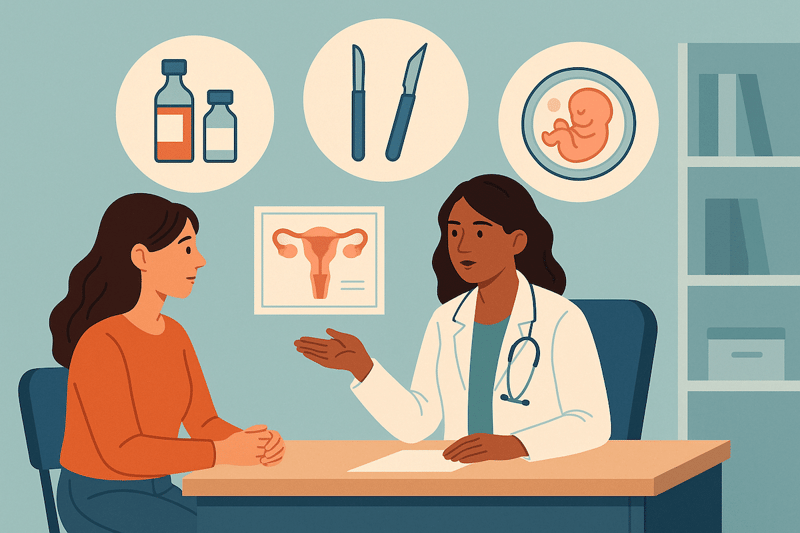
Several approaches can boost endometriosis fertility outcomes. The right path depends on your age, disease stage, ovarian reserve, and how long you have been trying.
Laparoscopic Surgery
Laparoscopy is the gold standard for diagnosing endometriosis and can also treat it. Surgeons remove or vaporize lesions, drain endometriomas, and free adhesions through small incisions. The ASRM patient fact sheet on endometriosis and infertility surgery confirms that laparoscopy can restore normal pelvic anatomy and improve natural conception rates, especially in stages 3 and 4.
However, surgery has limits. Repeated procedures on the ovaries can reduce ovarian reserve — anti-Müllerian hormone (AMH) levels drop up to 30% after unilateral endometrioma removal and up to 44% after bilateral surgery. For this reason, many specialists now recommend skipping surgery and going straight to IVF for severe cases.
Hormonal Therapy
Birth control pills, GnRH agonists, and progestins reduce endometriosis pain by suppressing estrogen, but they also stop ovulation. They are not used to treat endometriosis fertility directly. Some doctors prescribe a 2-3 month course before starting IVF to reduce inflammation and improve outcomes.
In Vitro Fertilization (IVF)
IVF bypasses many endometriosis-related barriers by retrieving eggs directly and fertilizing them in a lab. Success rates per cycle are typically:
- Under 35: 40% to 50% live birth rate per cycle
- 35-37: 30% to 40% live birth rate
- 38-40: 20% to 30% live birth rate
- Over 40: under 15% live birth rate
IVF is often the first-line treatment for women over 35 with moderate to severe endometriosis, women with blocked fallopian tubes, and couples with combined male factor infertility.
Intrauterine Insemination (IUI)
For mild endometriosis with open fallopian tubes, IUI combined with ovarian stimulation can improve endometriosis fertility chances. Success rates run 10% to 20% per cycle, and most specialists recommend trying 3 cycles before moving to IVF.
Building Your Path to Parenthood
If you are exploring different routes to parenthood — whether through IVF, donor sperm, or co-parenting arrangements — connecting with others on similar journeys can be invaluable. The CoParents community brings together people facing fertility challenges, including those navigating endometriosis fertility issues.
Lifestyle Factors That Support Fertility
Healthy habits will not cure endometriosis, but they can support endometriosis fertility treatment outcomes:
- Maintain a BMI between 18.5 and 24.9
- Eat anti-inflammatory foods (omega-3s, leafy greens, berries)
- Limit alcohol to fewer than 4 drinks per week
- Avoid smoking entirely
- Manage stress through yoga, meditation, or therapy
- Sleep 7-9 hours per night
Some studies suggest smoking reduces fertility by 13% per cigarette pack-year, so quitting before treatment matters.
Endometriosis Fertility After Conception: Pregnancy Risks
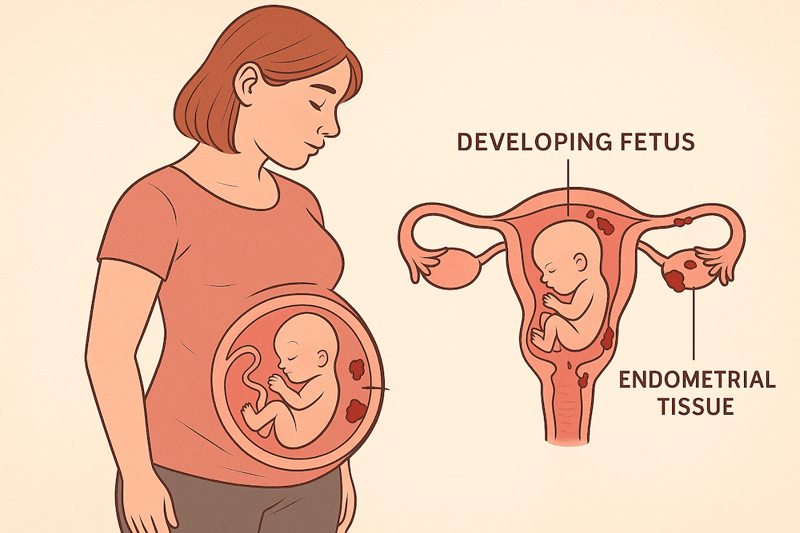
Once pregnant, women with endometriosis face slightly higher risks for certain complications: preterm birth, placenta previa, gestational hypertension, and cesarean delivery. These endometriosis fertility risks remain manageable with proper prenatal care, but require closer monitoring during the first and second trimesters.
Endometriosis pain typically improves during pregnancy because hormones suppress lesion activity. Many women experience their best months symptom-wise while pregnant.
Frequently Asked Questions
Can you get pregnant naturally with endometriosis?
Yes. About 60% to 70% of women with endometriosis conceive naturally, even with moderate to severe disease. Endometriosis fertility outcomes depend on stage, age, and how long you have been trying. Stages 1 and 2 often allow natural conception within 12 months.
What is the best fertility treatment for endometriosis?
The best treatment depends on your situation. For women under 35 with mild endometriosis, laparoscopic surgery plus 6-12 months of trying often works. For women over 35 or with severe disease, IVF typically offers the highest success rate per cycle.
Does endometriosis surgery improve fertility?
Laparoscopic surgery improves endometriosis fertility in stages 3 and 4 by restoring pelvic anatomy. According to ASRM, cumulative pregnancy rates reach 45% to 63% over two years post-surgery in severe cases. However, repeated surgeries can reduce ovarian reserve.
How long does it take to get pregnant with endometriosis?
On average, women with endometriosis take 2 to 3 times longer to conceive than women without it. Most pregnancies happen within 24 months when the disease is mild. Severe cases often require fertility treatment to achieve pregnancy.
Does endometriosis worsen with age?
Endometriosis lesions can grow over time, but symptoms often plateau or improve after menopause when estrogen drops. For fertility purposes, age matters more than disease progression — egg quality declines sharply after 35 regardless of endometriosis status.
Take the Next Step
Endometriosis fertility challenges are real, but they are not the end of your parenthood journey. Whether you are exploring natural conception, IVF, or alternative paths like sperm donation or co-parenting, you do not have to navigate endometriosis alone. Join the CoParents community to find a co-parent or sperm donor and connect with thousands of people on similar fertility journeys.