
Florida sperm bank options have never been more important — or more legally consequential — than in 2026. With the state home to some of the most experienced fertility centers in the Southeast, and a recent Florida Supreme Court ruling reshaping donor parental rights, anyone considering donor insemination here needs clear, current information before choosing a facility.
Whether you are a single woman by choice, a lesbian couple, or a heterosexual couple facing male-factor infertility, the path to parenthood through donor sperm involves medical, ethical and legal decisions that cannot be rushed. This guide walks you through what a Florida sperm bank actually does, what screening is required, how much it costs, and the one legal development every Floridian should know about before signing consent forms.
What is a Florida sperm bank and how does it work?
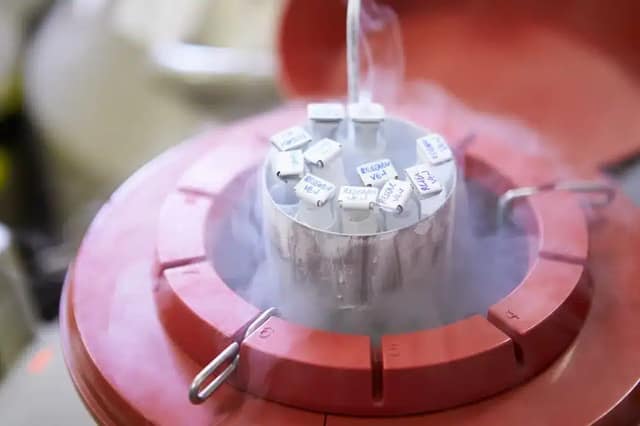
A sperm bank is a licensed tissue establishment that recruits, screens, freezes and distributes donor semen for reproductive use. In Florida, these facilities operate under federal FDA regulations as well as internal clinical protocols. A reputable Florida sperm bank will handle donor recruitment, infectious disease testing, genetic screening, cryopreservation, and distribution to fertility clinics or directly to patients.
Ready to start your project?
Join +450,000 members who find their co-parent or sperm donor
Start free✓ Free ✓ No commitment ✓ Verified
The core advantage is simple: professional infrastructure. Instead of relying on a friend or an informal arrangement, you get laboratory-verified samples, quarantined for at least six months, and matched with your specific medical and personal preferences.
Why choose a sperm bank over a known donor?
Friends and acquaintances sometimes offer to help, and the appeal is understandable. You know the person, you like them, you trust their character. However, known-donor arrangements carry real complications — both emotional and legal.
Will the donor want to co-parent later? What happens if his feelings change after birth? Who pays child support if circumstances shift? These questions have no easy answers. Moreover, a recent Florida Supreme Court decision has made informal home insemination riskier than ever (more on that below).
A Florida sperm bank removes most of these variables. You receive professionally screened samples, clear legal paperwork, and zero ambiguity about parental rights when the arrangement is clinical.
How are sperm donors screened in Florida?
Every donor accepted by a U.S. sperm bank must pass rigorous federal screening. The FDA regulates reproductive tissue donation under Title 21 CFR Part 1271 and requires testing for HIV types 1 and 2, hepatitis B, hepatitis C, syphilis, chlamydia, and gonorrhea. Sperm donors must additionally be tested for HTLV types I and II and cytomegalovirus (CMV).
The American Society for Reproductive Medicine (ASRM) 2024 guidance on gamete donation goes further. ASRM recommends that sperm donors ideally be 21 or older, undergo psychological evaluation by a qualified mental health professional, and be screened for carrier status of cystic fibrosis, spinal muscular atrophy and hemoglobinopathies. Leading banks now test donors for more than 260 genetic conditions using expanded carrier screening panels.
What screening should a Florida sperm bank perform?
- FDA-mandated infectious disease testing (HIV, hepatitis B and C, syphilis, chlamydia, gonorrhea, HTLV, CMV)
- Expanded genetic carrier screening for 250+ conditions
- Three-generation family medical history
- Physical examination and semen analysis
- Psychological evaluation
- Six-month quarantine of frozen samples before release
- Repeat infectious disease testing at six-month intervals
Because Florida does not require state licensing of sperm banks — only federal FDA registration — the onus falls on you to verify each facility’s protocols directly. Therefore, always ask for written screening documentation before committing.
Open-identity versus anonymous donors: what’s the difference?
Most modern sperm banks offer two donor tracks. An open-identity donor (sometimes called ID-release or non-identified) agrees that donor-conceived children can request identifying information once they turn 18. An anonymous donor does not. ASRM’s 2024 guidance explicitly notes that true anonymity is eroding due to widespread consumer DNA testing, and the organization now uses the term “nondirected” instead of “anonymous”.
For your child’s sake, open-identity is worth serious consideration. Research on donor-conceived adults consistently shows that access to biological information matters deeply to many of them as they grow up.
How much does a Florida sperm bank cost in 2026?
Pricing varies by facility, donor tier, and whether you need additional services like shipping or storage. Below is a realistic range for 2026:
| Service | Typical cost (USD) |
|---|---|
| Single vial of donor sperm (IUI-ready) | $800 – $1,200 |
| Single vial (ICI for home insemination) | $600 – $900 |
| Open-identity donor premium | +$100 – $300 per vial |
| Shipping (nitrogen tank) | $200 – $400 |
| Annual storage fee | $300 – $600 |
| IUI procedure at fertility clinic | $500 – $1,500 per cycle |
A typical patient budgets between 3,000 and 6,000 dollars per IUI attempt, including medications and monitoring. Success rates vary, so factor multiple cycles into your financial planning.
Florida law and sperm donor parental rights: what changed in 2025
This section matters enormously. Florida Statute 742.14 has long provided that sperm donors relinquish all parental rights and obligations. However, on December 30, 2025, in Brito v. Salas, the Florida Supreme Court ruled 4-3 that the automatic relinquishment only applies when assisted reproductive technology (ART) is used in a clinical setting. In other words, at-home insemination with a known donor no longer automatically severs the donor’s parental rights.
The practical consequence is stark. If you use a Florida sperm bank and a licensed clinic for insemination, the donor has no parental claim. If you use a known donor and an at-home kit, the donor may be able to pursue paternity, custody, or visitation — even years later, and even against the wishes of all original parties.
Consequently, choosing a clinical path through a registered Florida sperm bank is not just a medical preference in 2026. It is a legal shield for your family structure. Consult a Florida family law attorney before any donor arrangement to draft agreements that reflect this new landscape.
Selected sperm banks and fertility centers serving Florida
Florida-based patients typically source donor sperm from a mix of local fertility centers and large national banks that ship nationwide. Below are several Florida facilities commonly used by patients:
- Fertility Institute of NW Florida — 1110 Gulf Breeze Pkwy, Gulf Breeze, FL 32561 — 850-934-3900
- Cord:Use Cord Blood Bank — 270 S. Northlake Blvd., #1012, Altamonte Springs, FL 32701 — 800-869-8608
- Reproductive Health Associates — 2919 W. Swann Ave #307, Tampa, FL 33609 — 813-572-5300
Most Florida fertility clinics also partner with national cryobanks, giving you access to thousands of donor profiles nationwide. Furthermore, the CoParents community connects members who are navigating sperm donation and co-parenting choices, including those weighing sperm bank options against known-donor arrangements.
Questions to ask any Florida sperm bank before committing
- Is the facility registered with the FDA and can they show proof?
- What specific genetic conditions are included in your carrier screening panel?
- Are donors psychologically evaluated by a licensed professional?
- How many families is each donor limited to?
- Do you offer open-identity donors, and what does that agreement look like?
- How long have donated samples been quarantined before release?
- What is your policy if a donor is later found to carry a genetic condition?
- Can I review the donor’s full medical and family history before purchase?
Frequently Asked Questions
Are Florida sperm banks regulated by the state?
No. Florida does not license or regulate sperm banks at the state level. All Florida sperm banks must, however, register with the FDA and comply with federal HCT/P regulations under 21 CFR Part 1271. This means infectious disease testing is mandatory, but genetic and psychological screening standards vary by facility.
Can a sperm donor in Florida claim parental rights?
Under Florida Statute 742.14, donors who provide sperm through a clinical ART procedure relinquish all parental rights automatically. However, following the December 2025 Brito v. Salas ruling, at-home insemination with a known donor no longer triggers that automatic relinquishment. For full legal protection, always use a licensed fertility clinic and a written donor agreement.
How much does donor sperm cost at a Florida sperm bank?
A single IUI-ready vial typically costs between 800 and 1,200 dollars in 2026, with open-identity donors running 100 to 300 dollars higher per vial. Additional costs include shipping (200 to 400 dollars), annual storage (300 to 600 dollars), and the IUI procedure itself (500 to 1,500 dollars per cycle).
What is the difference between ICI and IUI sperm vials?
ICI (intracervical insemination) vials are intended for at-home use and contain whole semen. IUI (intrauterine insemination) vials have been washed and concentrated in a laboratory for use by a fertility clinic. IUI vials cost more but typically yield higher success rates per cycle.
Can single women and lesbian couples use a Florida sperm bank?
Yes. Florida sperm banks and fertility clinics serve single women, lesbian couples, and heterosexual couples equally. However, same-sex couples should be especially careful to document parental intent through a second-parent adoption or a pre-birth order, particularly in light of the 2025 Brito v. Salas ruling.
Ready to start your family-building journey?
Choosing donor sperm is one of the most personal decisions you will ever make. Take your time, ask hard questions, and involve both a fertility specialist and a family law attorney before you commit. If you are still exploring your options — including known donors, co-parenting partners, or community support — join CoParents to find a donor or co-parent and connect with thousands of members navigating the same path toward parenthood.