
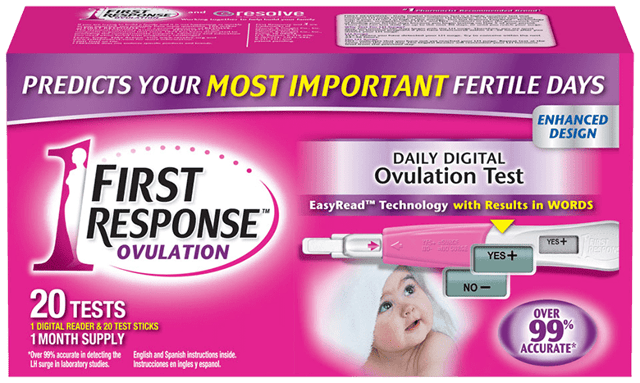
An ovulation test can pinpoint your most fertile days with up to 99% accuracy, dramatically improving your chances of conceiving each cycle. For couples trying to get pregnant, knowing exactly when ovulation occurs is the single most important factor — yet many women miss their fertile window entirely without realizing it.
If you are trying to conceive, an ovulation test removes the guesswork. The fertile window only lasts about six days each cycle, and missing it means waiting another month. This guide explains how an ovulation test works, which type is most accurate, and how to combine it with other methods for the best results. The science behind these tools is well established, and using one correctly can significantly shorten your time to pregnancy.
What is an ovulation test, exactly?
An ovulation test is a home device that detects hormonal or biological signals associated with ovulation. The most common version measures the surge of luteinizing hormone (LH) in your urine, which typically occurs 24 to 36 hours before ovulation. Other types track basal body temperature, cervical mucus changes, or the salt patterns in saliva.
Ready to start your project?
Join +450,000 members who find their co-parent or sperm donor
Start free✓ Free ✓ No commitment ✓ Verified
According to the U.S. National Library of Medicine’s MedlinePlus encyclopedia, urinary LH ovulation test kits are widely available over-the-counter and provide reliable results when used correctly. They work because the LH surge — a sharp rise in pituitary hormone — directly triggers the release of a mature egg from the ovary.
Why timing your fertile window matters
The biological fertile window lasts only about 6 days: the 5 days before ovulation plus the day of ovulation itself. Sperm can survive up to 5 days in the female reproductive tract, but an egg only lives 12 to 24 hours after release. Miss by a day or two and the cycle is lost.
Research published by the U.S. Office on Women’s Health shows that ovulation timing is the leading factor in natural conception success. An ovulation test gives you the warning you need to act on the right day. If you understand the four phases of your menstrual cycle, an ovulation test becomes even more useful — it confirms what your body is signaling and lets you plan precisely.
The 5 main types of ovulation test
Not all ovulation tests work the same way. Each measures a different biological signal, with different levels of accuracy and convenience.
1. Urine-based LH ovulation test
This is the most popular and accurate home method. You urinate on a stick or dip it into a collected sample, and the test reveals whether your LH levels have surged. According to clinical research published in the National Library of Medicine, urinary LH ovulation test methods correctly identify ovulation in over 94% of cycles.
For best results:
- Test in the late morning or afternoon — not first thing in the morning
- Limit fluid intake 2 hours before testing to avoid diluting urine
- Test daily starting 2–3 days before your expected ovulation
- Once you get a positive result, ovulation will occur within 24–36 hours
2. Saliva ferning ovulation test
A saliva-based ovulation test detects rising estrogen levels by examining the salt patterns in dried saliva. Place a drop of saliva on the lens of a small reusable microscope, let it dry for 5 minutes, then look for a “fern-like” crystal pattern indicating fertility.
This method is reusable and inexpensive (around $20–30), but accuracy is limited. Studies show saliva ferning correctly identifies ovulation in only 42–53% of cycles. Eating, drinking, or brushing teeth before testing can distort results.
3. Basal body temperature (BBT) tracking
A basal thermometer measures your resting temperature each morning before getting out of bed. After ovulation, BBT rises by 0.5 to 1°F due to increased progesterone. Charted over several cycles, this reveals your typical ovulation pattern.
The drawback: BBT tracking confirms ovulation after it happens, not before. It is best used alongside a urine-based ovulation test, not as a standalone tool.
4. Cervical mucus monitoring
Cervical mucus changes throughout your cycle. As ovulation approaches, mucus becomes clear, slippery, and stretchy — similar to raw egg whites. This is your most fertile sign. After ovulation, mucus becomes sticky, cloudy, or scant.
This method is free and reasonably accurate but requires daily attention and self-observation. It is less reliable for women on hormonal contraception, those with vaginitis, or those breastfeeding.
5. Digital fertility monitors
Advanced digital monitors combine LH detection with estrogen tracking and store data across multiple cycles. Devices like the Clearblue Advanced Fertility Monitor identify up to 6 fertile days with over 99% accuracy on LH detection. Wearable trackers like Ava or Tempdrop measure skin temperature, heart rate, and breathing overnight to estimate the fertile window.
For a complete comparison of monitor types and prices, see our guide on choosing the right fertility monitor.
Comparing ovulation test methods
| Method | Accuracy | Cost | Best for |
|---|---|---|---|
| Urine LH ovulation test | 94–99% | $10–30 per cycle | Most users — easy and reliable |
| Digital fertility monitor | 99% | $100–300 + sticks | Long-term tracking, irregular cycles |
| BBT thermometer | 22–80% | $10–25 (one-time) | Confirming ovulation patterns |
| Saliva ferning kit | 42–53% | $20–30 (reusable) | Backup method only |
| Cervical mucus tracking | 48–76% | Free | Combined with other methods |
How to use an ovulation test correctly
Even the best ovulation test fails if used incorrectly. Here is the evidence-based protocol for urine-based LH ovulation test kits:
- Calculate your start day — for a 28-day cycle, begin testing on day 11; subtract 17 from your shortest cycle length
- Test at the same time each day, ideally between 10 a.m. and 8 p.m.
- Avoid drinking large quantities of water in the 2 hours before testing
- Read results within the time specified — usually 5 to 10 minutes
- Continue testing daily until you detect a clear positive (test line as dark or darker than the control line)
- Plan intercourse or insemination within 24–36 hours of the positive result, ideally that day and the next
For women using donor sperm or planning home insemination with donor sperm, an ovulation test is essential because clinic appointments and donor coordination depend on accurate timing.
When an ovulation test may not be reliable
An ovulation test works best for women with regular cycles and normal hormonal balance. According to Johns Hopkins Medicine, ovulation predictor kits may give misleading results in several situations:
- Polycystic ovary syndrome (PCOS) — chronically elevated LH can produce false positives
- Perimenopause — fluctuating LH baseline reduces accuracy
- Recent fertility medication use — drugs like Clomid alter hormone patterns temporarily
- Irregular cycles — make it harder to time the testing window
- Pregnancy — hCG can cross-react with LH tests
If you have irregular cycles or have been trying for over 6 months without success, it may be time to consult a fertility specialist. A blood test or pelvic ultrasound can confirm whether ovulation is happening at all.
Combining methods for the best chance of conception
The most successful approach combines two or three methods: a urine-based ovulation test for prediction, BBT tracking to confirm ovulation occurred, and cervical mucus observation as a backup signal. Together, they provide a much fuller picture than any single tool.
A 2015 Cochrane review found that timed intercourse using urinary hormone monitoring increased pregnancy rates by approximately 36% compared to intercourse without monitoring. The combination of accurate ovulation timing and consistent cycle tracking remains the foundation of natural fertility planning.
If you’re working with a sperm donor or known co-parent, precise timing becomes even more important. The CoParents community connects future parents and committed donors who understand the importance of cycle coordination and timed conception.
Frequently asked questions about ovulation test methods
How early can an ovulation test detect ovulation?
A urine-based ovulation test detects the LH surge typically 24 to 36 hours before ovulation occurs. Some advanced digital monitors detect rising estrogen even earlier, identifying up to 6 fertile days before ovulation. This gives you advance notice to plan intercourse or insemination.
How long should I keep using an ovulation test?
Most women see meaningful results within 3 cycles of consistent testing. If you have not detected an LH surge after several cycles, or if you have been trying to conceive for over 12 months (or 6 months if you are over 35), schedule an appointment with a fertility specialist for further evaluation.
Can an ovulation test be used to prevent pregnancy?
No. An ovulation test only confirms ovulation is imminent — it does not provide reliable contraception. Sperm can survive up to 5 days in the reproductive tract, meaning conception can occur from intercourse that took place several days before a positive ovulation test result. Use approved contraception methods if pregnancy is not your goal.
What’s the difference between an ovulation test and a fertility monitor?
A simple ovulation test measures a single signal (usually LH) and tells you whether ovulation is approaching. A fertility monitor stores data across multiple cycles, learns your personal hormonal pattern, and often detects multiple hormones for greater accuracy and earlier warning. Monitors cost more but offer richer information for women with irregular cycles or those who have been trying to conceive for several months.
Does an ovulation test work if I have PCOS?
Results can be unreliable. Women with PCOS often have chronically elevated LH levels, which produces false positives. If you have PCOS, an ovulation test should be combined with BBT tracking, cervical mucus observation, and ideally clinical monitoring through your doctor.
Ready to optimize your path to pregnancy? Join the CoParents community to find a sperm donor or co-parent who shares your commitment to a thoughtful, well-timed conception — and connect with future parents navigating the same journey.